




























DOJ Is Questioning Whether Nvidia Buying Hugging Face Gives It Too Much Power, Sources Say
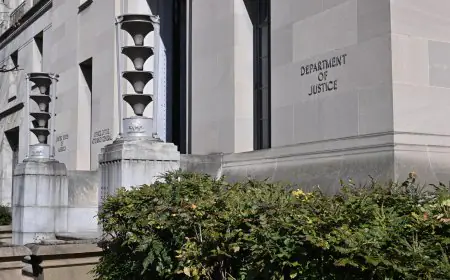
The Justice Department has reportedly asked whether Nvidia's $12.93 billion Hugging Face deal would give it a key distribution point for AI and a way to disadvantage rivals, according to anonymous sources cited by Reuters and CNBC. It is an inquiry, not a lawsuit, and Nvidia declined to comment.
Nvidia sells the chips that train the models. In September it agreed to buy the place where a huge share of those models live. Now the Justice Department is asking what that combination would mean for everyone else, according to anonymous sources.


Reuters broke the story on Wednesday, citing two people familiar with the matter. CNBC then confirmed the inquiry with a person familiar who was not authorized to speak publicly. Nobody has named a source, and neither report describes a lawsuit, a charge or a formal challenge to the deal. Reuters itself notes that government investigations "are not evidence of wrongdoing and do not necessarily result in lawsuits," and that the probe may not lead to any action.
What the sources did describe is a set of pointed questions. Per Reuters, DOJ officials have asked whether the $12.93 billion deal would let Nvidia capture what the sources called a fundamental distribution point for AI. They have asked how Nvidia might use the platform to harm rivals, and whether it could use Hugging Face to gain leverage. Officials are also asking about Hugging Face's competitors.
That is the whole ballgame for a platform like this. Hugging Face is where developers share and test open models. Nvidia said at announcement that more than 18 million people and more than 200,000 companies use it, with at least 3 million models and 500,000 datasets on the site. CNBC calls GitHub, which Microsoft bought in 2018 for $7.5 billion, the closest comparable. Whoever owns the hub gets a view of what developers build.
"Hugging Face will remain an open platform for the entire AI ecosystem." Jensen Huang, Nvidia CEO, in a September 3 blog post
Nvidia has made that pledge in public. Huang also wrote that Nvidia compute will not be required to build on or deploy through Hugging Face, and the company has said the platform will keep supporting a range of chip, cloud and AI providers. The deal is expected to close in the first half of 2027. Nvidia declined to comment to CNBC on the DOJ's questions, and I could not find any comment from Hugging Face in the reporting so far.
The Hugging Face questions do not stand alone. Reuters reports they come as antitrust enforcers pursue a years-long examination of Nvidia's conduct, one that began under Joe Biden and has continued under Donald Trump. Reuters says there is no indication that Trump is involved. According to the sources, recent questioning covers Nvidia's acquisitions, investments and sales practices, and whether it has pressured customers.
A pattern of dealmaking under a microscope
The earlier deals are part of that picture. Reuters reports the DOJ has examined Nvidia's December 2025 purchase of SchedMD and its acquisition of Run:ai. It has also scrutinized the Groq arrangement, which CNBC prices at $20 billion for Groq assets. Officials, the sources said, explored whether Nvidia unfairly offered larger allocations of AI chips to customers that also bought its networking gear and Groq processors. We covered the DOJ's earlier look at the Nvidia-Groq licensing deal in September.
The DOJ's public posture is carefully worded. A spokesperson declined to comment on matters before the department, citing longstanding policy, and then said this:
"It would be inappropriate for the Department to conduct a merger investigation under the guise of a conduct investigation." DOJ spokesperson, as quoted by Reuters
The excerpts I could read do not say what prompted that line, and it cuts in a few directions. It could be a nod to the line between reviewing a merger and probing a company's conduct. It is also a notable thing for the department to volunteer while the overlap is the subject of the story. Treat it as a quote in search of context, not a confirmation of anything.
Here is the skeptical read. Nvidia's pitch is that Hugging Face stays neutral, and neutrality is easy to promise before a deal closes. The DOJ's reported questions suggest officials want to know what happens after. A promise on a blog is not a merger remedy, and regulators know the difference. Whether that scrutiny turns into anything is unknown, and nothing in the reporting says it will.